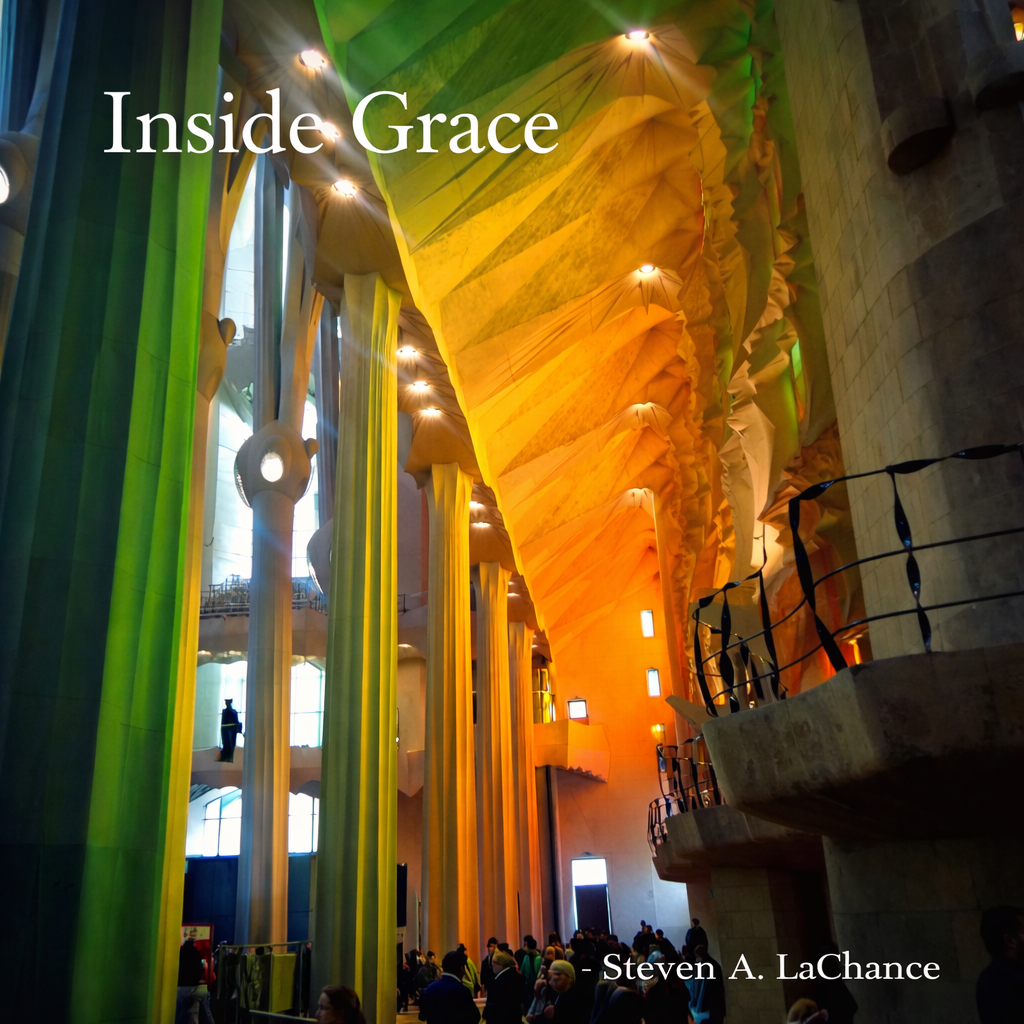
I’ve spent some time over this past week writing about the crucifixion and the resurrection. Not because I felt the need to explain them, and not because I think I have answers that anyone else doesn’t. I wrote because I had something to say, and because it is still rare to see a gay man speak about these things without distance, without apology, or without turning it into a fight.
The reason for this is simple. I have never believed that faith and identity had to be at odds with each other. Somewhere along the way those ideas were pulled apart, not by the teachings themselves but by the way people chose to interpret them. If you hear that long enough, you start to think it is real.
But it never felt real to me.
I never experienced what I believe and who I am as something that excluded me. They were never in conflict. I was, and I am, a child of God. It was never about who I loved, only that I loved.
That sense of separation always seemed to come from outside voices, from institutions and individuals who were more focused on defining boundaries than understanding what was actually being said. So over time I learned to step back from that. Not from the message, but from everything that had been layered on top of it.
When you do that, when you sit with the words and the actions without all of the added interpretation, something changes. The tone becomes clearer. It stops feeling like something meant to divide people and starts to feel like something meant to reach them where they are.
I learned early to trust what felt true. I could see the hypocrisy in the world, and I could recognize hate when it was wrapped in something calling itself doctrine.
No religion is perfect. There is a place and time for it, but it is not the only path to the spiritual self. In fact, some of the earliest teachings point in a different direction. There are traditions that reflect Jesus teaching that the path is not controlled by institutions, but something that can be found within you. A connection that does not require a building, a hierarchy, or permission from anyone else.
And yet, there are churches that operate in direct opposition to that idea.
I remember being a kid in Sunday school, sitting there with a coloring sheet of Jesus in the temple, a whip in his hand, coins flying everywhere. Even then, it was clear what that moment meant. He was reacting to something that had crossed a line, something that had turned faith into something it was never meant to be.
And while I was coloring that image, they passed a plate and asked me to put my quarter in.
Even as a kid, I remember thinking… what?
I know that is a simplified moment, but it stayed with me. Not because it made me angry, but because it made me question. And looking back, that questioning mattered. It pushed me to look deeper, to separate what felt true from what felt constructed.
That is why I write about this now. Not to argue with those who have already made up their minds, but for two groups of people. For those who believe a gay man could never speak on these things with understanding, and for those in my own community who have been made to feel like they are not allowed to.
Because that idea did not come from God. That came from people.
There is an old saying that the greatest trick the devil ever pulled was convincing the world he does not exist. I believe something similar has happened here. One of the most damaging ideas placed on the LGBTQ+ community is that they stand outside of grace, that they are permitted to exist but denied belonging, denied prayer, denied full connection to God.
That is not truth.
No one has the authority to stand between you and your connection to God. No institution, no doctrine, no person gets to decide whether you are worthy of that. And I know there will be people reading this who are uncomfortable with that, people who believe I have no place speaking on faith at all. But the truth is, nothing I have said stands in opposition to the teachings themselves.
It stands in opposition to what has been done with them.
Because nowhere in those teachings does it say that love, connection, or grace are reserved for only a select few. What it does challenge, again and again, is hypocrisy, exclusion, and the misuse of power.
Those are the things that should be questioned.
Not who is allowed to seek God.
 Steven LaChance Blog
Leave a comment