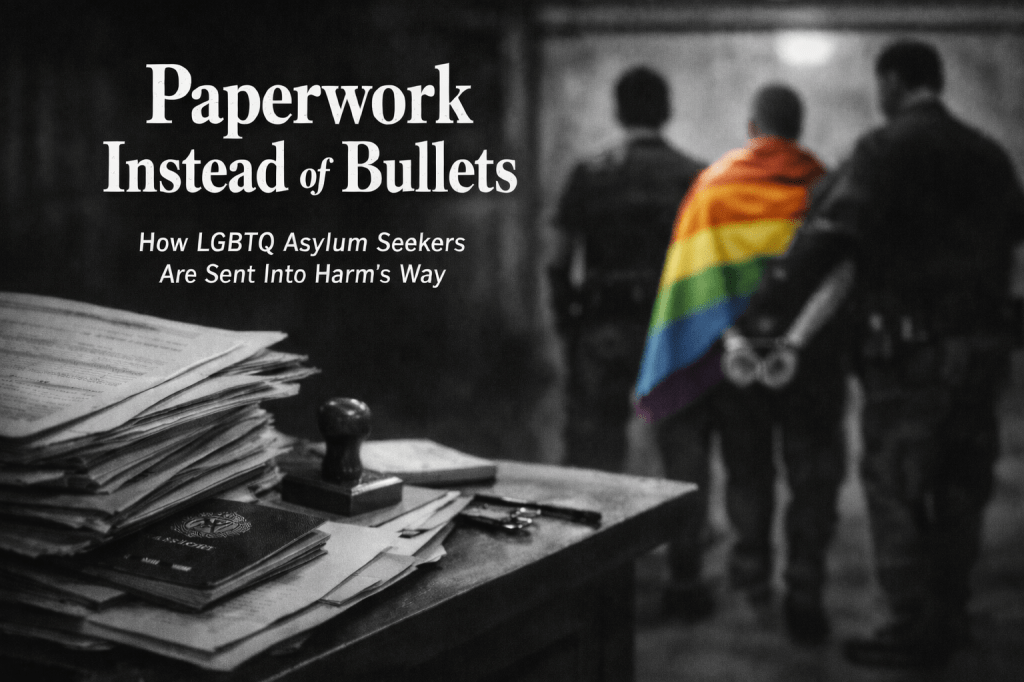
Right now, the United States is using a practice that allows asylum seekers to be deported to third countries. That means people are not necessarily sent back to where they came from. They can be sent to any country willing to accept them. For LGBTQ+ refugees fleeing persecution, this has life or death consequences. People escaping places like Iran are now at risk of being sent to countries such as Uganda, where laws and social conditions make violence against queer people foreseeable. This is not theoretical. It is happening now, through policy changes and quiet transfer agreements.
Here is what people need to understand, because the way this is being discussed makes it sound more complicated than it really is. LGBTQ+ asylum seekers come to the United States asking for protection. These are people who fled their home countries because they were being targeted, beaten, arrested, or threatened with death for who they are. Instead of having their cases fully heard here, some are now being removed through third-country deportations. That means they are not always sent home. They are sent wherever a government agrees to take them, even if that place is dangerous for queer people.
So the sequence is simple. First, people are pulled out of relative safety. Second, they are transferred into environments where persecution is documented and predictable. Third, the original government steps back while whatever happens next happens somewhere else. On paper, it looks clean. In reality, it is devastating. The United States is not physically executing anyone, but it is knowingly placing LGBTQ+ people into countries where imprisonment, abuse, or death is likely. The violence is outsourced. The paperwork stays clean. The consequences land elsewhere.
This is where people get confused. They hear the word deportation and assume this is just immigration enforcement. It is not. When you knowingly send someone into a place where serious harm is foreseeable, that is forced return to danger. It does not matter whether it is their home country or a third country. The outcome is what matters. Some of these people will be jailed. Some will be beaten. Some will disappear. Some will die. Not because the United States pulled the trigger, but because it handed them over to systems that will. That distinction only exists on paper.
And this is where it becomes personal for me. The idea that our government would remove LGBTQ+ people from safety and place them into countries where their identity alone can get them killed is more than disturbing. It feels like a call back to darker chapters of history. It is one thing to deny asylum. It is another thing entirely to knowingly expose people to lethal harm. Every queer person in this country should be paying attention to this, because if they will do this to them, it means they have no empathy for you either. When empathy disappears from policy, things get ugly fast.
People also need to understand the scale of what this means moving forward. Once a system accepts the idea that some lives are negotiable, that protection depends on convenience, and that safety can be quietly revoked through bureaucracy, it does not stop with one group. Today it is asylum seekers. Tomorrow it can be broader categories. Once identity-based removal becomes normalized, it stops being exceptional and starts being policy. That is how modern persecution works. Not with soldiers in the street and not with public roundups, but with agreements, procedures, and quiet flights in the middle of the night. You do not have to pull the trigger to be responsible for where the bullet lands.
This is not about a handful of cases. This is about setting a precedent that says queer lives are conditional, that protection is optional, and that harm can be outsourced while responsibility is avoided. History has seen this pattern before. The mechanism changes. The outcome does not. Years from now there will be documents, timelines, and official explanations. But there will also be this simpler truth. People were removed from safety. They were sent into danger. Some did not survive. And many of us saw it happening in real time.
 Steven LaChance Blog
Leave a comment