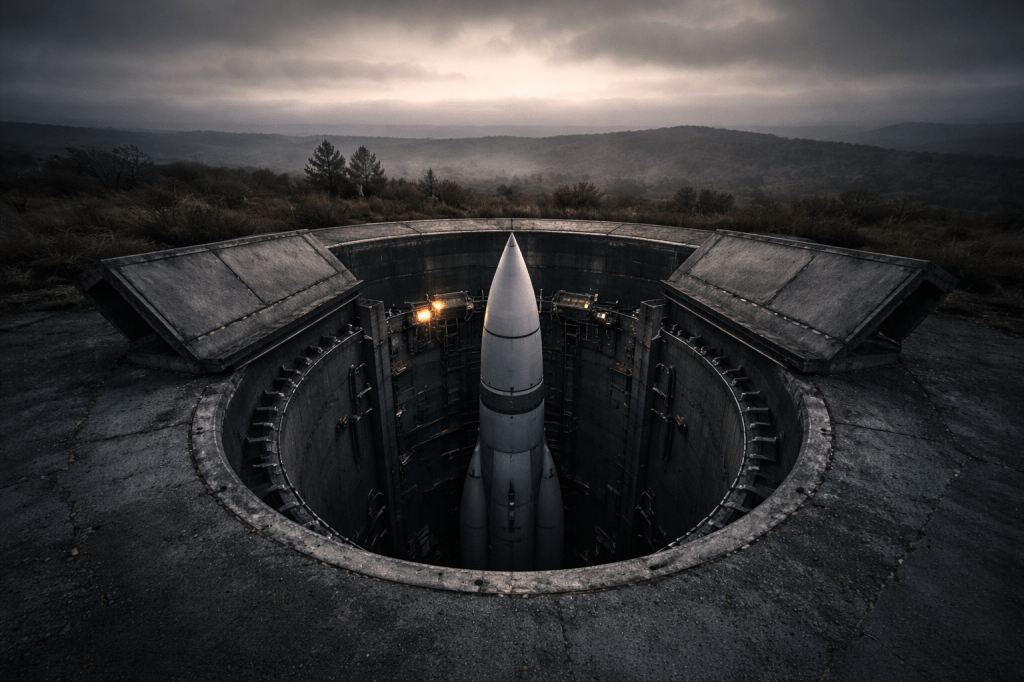
These past few weeks have started to feel a lot like growing up all over again. That quiet rhythm of war in the background, the constant awareness that something bigger could happen, the thought of nuclear war just sitting there while we go about our daily lives. It gets into your head if you let it. That is why it matters to stop for a minute and put things back into perspective.
It is never acceptable for anyone, especially a United States President, to talk about wiping out an entire civilization. That kind of language does not stay contained. It moves things. It lowers the threshold. And once something like that starts, it does not end cleanly. It spreads, it escalates, and it pulls everyone into it. An eye for an eye does not stop anything. It just guarantees there is nothing left.
But the reality is more grounded than it feels. A full scale nuclear war, the kind people picture with missiles crossing the sky between major powers, still appears unlikely. Not impossible, but unlikely, because nuclear powers understand that once that line is crossed, there is no real winning. That logic has held for decades, even in far more dangerous moments.
Where I have to stay honest is when I look at Israel. That concern has always been there, because they live under a kind of pressure most countries never experience, one tied directly to survival. But let’s not pretend they are innocent in all of this. They are not. No country operating at this level is. Decisions are made, lines are crossed, and actions have consequences far beyond their borders.
Because even with that reality, I still come back to the same place. Their nuclear capability exists as a deterrent, not a first move. For that line to be crossed, it would mean they believed they were about to cease to exist. That is not a casual decision. That is the edge of everything.
The more realistic risk is not a planned first strike by anyone, but escalation under pressure. A regional conflict grows. Iran becomes more directly involved. Lines get crossed, options narrow, and decisions start happening faster than they should.
There is also a real risk of retaliation as this escalates. History shows that when pressure builds at this level, it rarely stays contained. But it does not usually unfold as a clean, coordinated wave. It shows up in uneven ways, through isolated attacks, smaller operations, or individuals acting on their own. The danger is not certainty. It is increased probability. And ignoring that would be just as misguided as assuming the worst case is inevitable.
And a lot of this does not happen in ways people can see. It happens through proxies and smaller aligned groups. It happens in cyberspace, in infrastructure, in banking systems, in utilities. It happens inside countries as much as between them, where public pressure and political survival start shaping decisions. It happens through misreads and mistakes, where one move is interpreted differently than it was intended. It happens in information, where speed overtakes accuracy and decisions get made before the full picture is clear.
That is where danger lives, in miscalculation and momentum, not in a clean, intentional choice to start a nuclear war.
This is also a war that should never have been started, and not something that should ever have been entered into lightly. Once that line is crossed, it becomes very difficult to step back from it. The attempted ceasefire did not hold as a real de escalation effort. It was announced, but almost immediately undermined by disputes over what it actually covered and renewed strikes in connected areas. When the parties are not even operating from the same map, the ceasefire becomes a word, not a reality. That leaves very few true off ramps and keeps pressure building without a clear release.
And the part that often gets missed is this. Even if the worst case scenario never happens, we are not untouched. The impact most of us are likely to feel comes through the economy. Rising tensions strain energy, supply chains, and food systems. Prices go up. Stability tightens. But it goes deeper than that over time. Sanctions, trade shifts, and energy realignment begin to reshape who depends on who. Over time, that changes alliances, leverage, and stability in ways that are not always immediately visible.
For some countries, especially the more vulnerable ones, that pressure can become something much worse, even famine. For others, it shows up as higher costs and a steady sense that things are shifting underneath us.
The bottom line is this. We are not on the edge of nuclear war, even if it feels that way some days. That outcome remains unlikely.
But we are in a moment where pressure is building, language is getting more dangerous, and the systems that usually slow things down are being tested.
The risk is not a planned march into catastrophe. It is miscalculation. It is momentum. It is decisions made in tighter and tighter spaces.
And while most of us will never see missiles in the sky, we are already inside the consequences.
 Steven LaChance Blog
Leave a comment