The 1949 St. Louis exorcism is one of the most documented and debated cases of possession in American history. It is the case that inspired The Exorcist, but most of what people think they know comes from film, not from the actual accounts. When you go back to Father Bishop’s diary and read what was recorded in real time, it feels very different. More grounded. More physical. And in a lot of ways, more unsettling because of it.
This wasn’t just an isolated event. It shaped how people came to understand possession, the devil, and spiritual warfare for generations, and that is why it still matters.
And almost no one talks about how it ends.
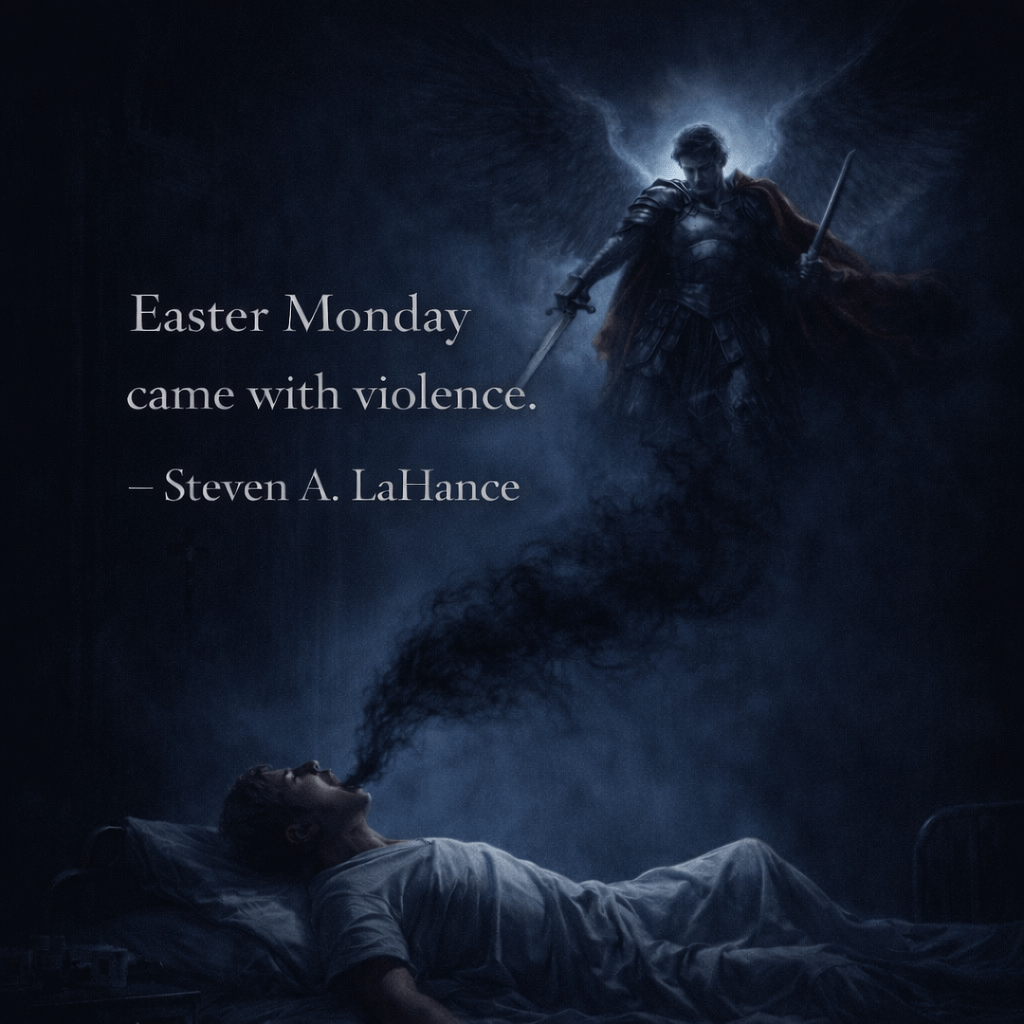
The last day falls on the day after Easter in 1949, and that detail tends to get overlooked. What you’re reading isn’t just a sequence of events. It’s unfolding alongside one of the most significant moments in the Christian calendar. Resurrection on Sunday, and then this.
The final day doesn’t ease into anything. It starts violent and stays that way. He’s out of control, kicking, throwing, fighting everything placed near him. Food trays smashed against the wall. Glass breaking. The room worn down, everyone in it carrying the weight of something that hasn’t broken yet.
And through all of it, there’s the voice. It resists, it mocks, and it makes one thing very clear. He will never say the word. One word is all it would take, and it keeps coming back to that, almost as if it knows exactly where this is going.
That’s where they are going into that night.
When it shifts, it doesn’t feel gradual. The prayers continue, the room is already exhausted, and then a voice cuts through it. Clear. Commanding. Not chaotic.
“I am St. Michael the Archangel… and I command you… to leave… in the name of Dominus.”
And then everything that has been building all day releases at once. Violence. Full body contortion. A final fight that takes everything out of that room. Minutes where it all comes to a head in a way that doesn’t feel symbolic. It feels physical.
And then it stops.
“He’s gone.”
At that same moment, across the city, in St. Francis Xavier College Church, the dome is described as lighting up. Not something subtle. Not something you have to interpret. Lit. And within that light, the appearance of St. Michael the Archangel. Two places, one moment, tied together in a way that is hard to dismiss.
And when it’s over, when the boy describes what he saw, it doesn’t come back as some long explanation. There’s no speech attached to it, no drawn-out message trying to explain what just happened.
Just the light, the figure, the confrontation.
And when St. Michael the Archangel speaks, after everything that has happened, he hears one word.
Dominus.
The Lord.
The day after Easter.
That’s how it ends.
— Steven A. LaChance
Confrontation with Evil
 Steven LaChance Blog
Leave a comment