What is a thought form?
A lot of people hear the word “thought form” and immediately think it means you imagined something.
That’s not what it means at all.
A thought form is what can happen when emotion builds up within a person over time with nowhere to go. Grief. Stress. Fear. Anger. Things that are heavy that you carry with you. They sit there under the surface until something shifts, and it doesn’t stay contained anymore.
And when that happens, it can start to feel like something outside of you. In a way, it becomes something you created, even if you didn’t mean to.
The sounds feel real. The movement feels real. The sense that something is there with you feels real. Because in a way, it is. Not as a separate spirit or entity, but as something shaped and sustained by your own internal pressure.
Over the years, I’ve seen this pattern enough to recognize it. Not everything comes from the outside of us. We like to think everything is a spirit or something attached to a place, but that’s not always the case. Some things are built from within us, and then we experience them outwardly.
That doesn’t make the experience any less real for the person going through it. It just changes where it started. And these are often the hardest situations to help with, because at some point a person has to understand how they participated in creating it, and how they may be sustaining their own haunting.
So what do I think?
I think our emotions and our thoughts carry real weight in our lives. They don’t just stay inside us. They move with us. They show up in ways other people can feel.
You walk into a room in a bad mood and people know it. Not because you said anything, but because something about you changed. There’s an energy to it. An edge. A presence people pick up on without needing an explanation.
Now take that idea a step further.
What happens when that kind of emotion builds over time? When it doesn’t get released or processed? When it just sits there and grows?
I believe there are times when that kind of buildup can begin to take on a form of its own. Not as something separate in the way we think of a spirit, but something that starts to act independent from the person it came from.
I would put some classic poltergeist cases into that category.
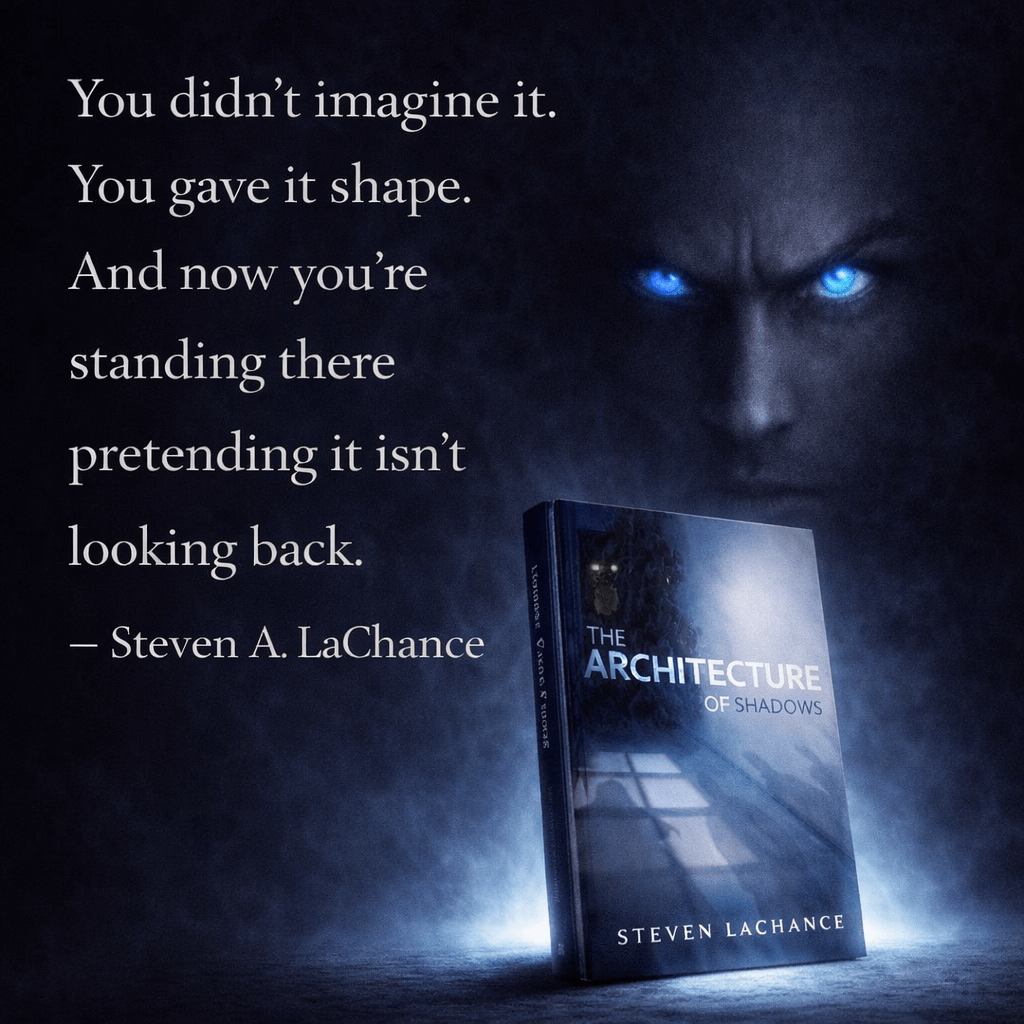
In Architecture of Shadows, I talk about one case involving a teenage girl whose sadness didn’t stay contained. It spilled out into her environment in ways that became disruptive and, at times, extremely destructive.
I’ve seen this firsthand.
And whether someone chooses to see that as psychological, environmental, or something we don’t fully understand yet, the pattern is there.
At the end of the day, this is still theory, because none of it has been scientifically proven as absolute, but that doesn’t mean people aren’t experiencing it, it just means theory and hypothesis are what we have to work with right now.
 Steven LaChance Blog
Leave a comment