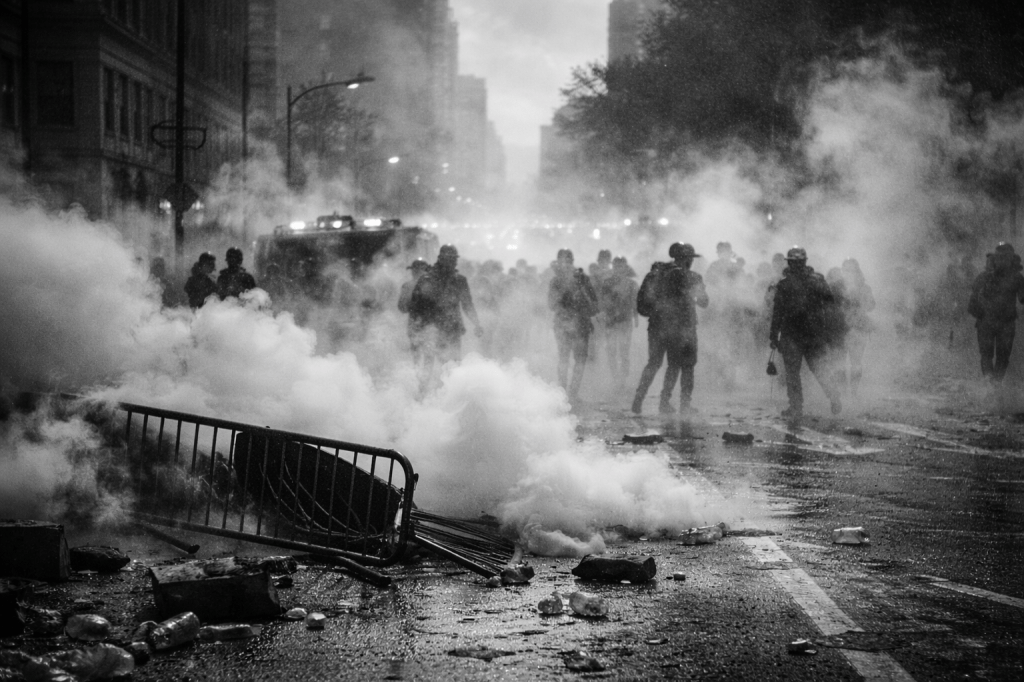
Things are unsettled right now. That is not a political statement. It is an observable reality. Situations escalate faster than they used to. Authority is exercised unevenly. Explanations often come later, if they come at all. That reality changes how responsible people need to think about engagement in everyday life.
This is not about telling anyone to retreat, disengage, or stay silent. People should protest, speak, organize, and show up in ways that align with their values. But pretending that risk has not changed does not help anyone. Responsible activism starts with understanding the conditions you are operating in and making informed choices about exposure.
One of the biggest mistakes right now is assuming that protests are the only places where danger exists. They are not. Risk exists anywhere you are vulnerable in a situation you cannot quickly control or exit. Crowded spaces, confined environments, transit hubs, public buildings, and moments where force or panic could suddenly enter the picture all carry potential risk. Focusing only on protests misses the larger point. This moment requires daily situational awareness, not performative bravery.
Here is the plain truth: if you are at higher risk in a situation, you should protect yourself. That is not weakness. It is common sense. An asthmatic should avoid places where tear gas or chemical agents could be deployed. Someone with heart conditions or prior chest injury should avoid dense crowds where a shove, fall, or impact could cause serious harm. A person with mobility issues should not place themselves in situations where they may need to move quickly or escape without warning. Parents and caregivers should not put children in environments where chaos, force, or separation is even a possibility. If your health, age, or circumstances mean recovery would be difficult, your margin for risk is smaller, and that matters.
None of this means you do not care. None of this means you are opting out. It means you are being honest about reality. Lower-risk engagement is about choosing how you participate based on who you are and what you carry. Supporting, amplifying, documenting, donating, writing, organizing, witnessing, staying on the edges, or leaving early are not lesser forms of engagement. They are often the reason movements last beyond a single moment.
There is another truth that needs to be stated clearly. You do not owe anyone your body. Leaving when conditions change is not failure. Staying past the point of safety does not prove commitment. It only increases the chance that you or someone you love will be harmed. Exit is not cowardice. It is situational awareness.
To be clear, I am not asking anyone to retreat. I am asking people to assess and evaluate their situational exposure every day of the week. Pay attention to where you are, how vulnerable you might be in that moment, and how easily you could remove yourself if things shifted quickly. This is not about fear or ideology. It is about awareness.
This is responsible activism. Unsettled times do not require everyone to stand in the same place or take the same risks. They require people to stay intact long enough to keep going. Adjusting how you engage is not retreat. It is adaptation.
Protect yourself. Protect your family. Stay aware. Stay human.
 Steven LaChance Blog
Leave a comment