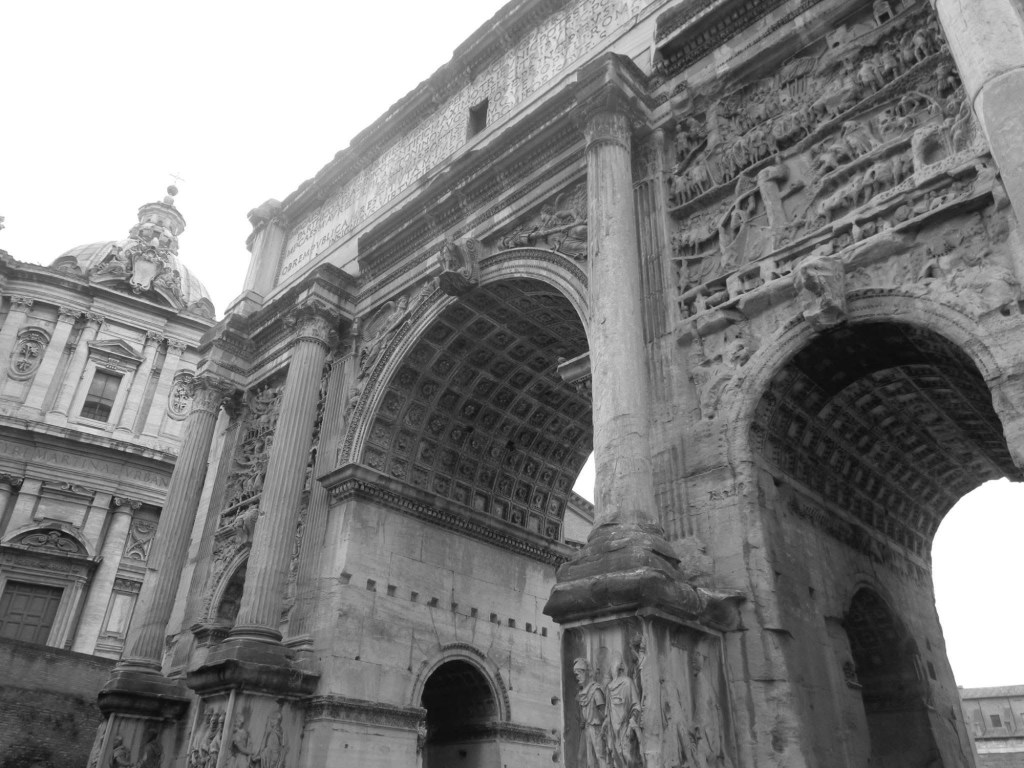
I found myself standing at the threshold of history, at the place where the groundwork for so much of the world we recognize today was first laid, the Roman Forum.
It is easy to think of the Forum as a place you visit, something safely contained in guidebooks and the past. That is the first mistake most people make. The Forum is not finished with us. It is very present in our current lives, and it is haunted.
Haunted in the traditional sense, yes, but also in a living way. Haunted by ideas, by power, by human behavior repeating itself. Its heart still beats, and it beats strongest in the darkest places.
The Forum was the center of Roman life for more than a thousand years. This was not just where history happened. This was where daily life unfolded in full view of the state.
Politics, religion, law, commerce, celebration, and punishment all shared the same ground. Emperors were elevated here. Enemies of the state were condemned here. Laws that still echo through modern governments were debated and enforced here. If Rome was a body, the Forum was its nervous system, carrying signals of authority, fear, ambition, and control outward across the empire and forward through time.
Most people enter the Forum the same way, coming from the Colosseum side and passing beneath the Arch of Constantine. It feels like a simple transition, a short walk from one famous ruin to another. But that arch is not just stone. It is the Forum’s portal. Roman triumphal arches were built to mark dominance and divine favor, to announce that power had prevailed. They were designed to be crossed, and crossing them was meant to be felt.
And you do feel it.
As you step beneath the arch, there is a literal shift. Not dramatic. Not theatrical. Just enough that your body registers it before your mind does. The space tightens, then opens. The air feels heavier. The modern world slips half a step behind you.
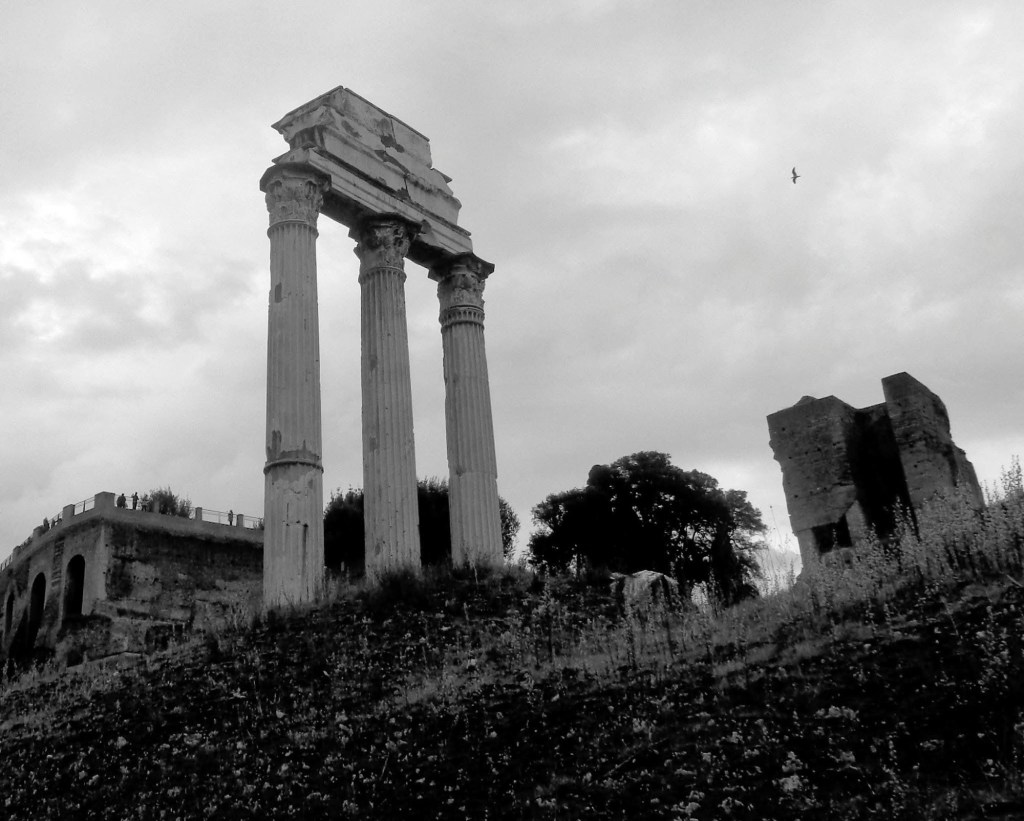
When you look up, the ruined arches of the Forum rise into the sky like the ribs of something long dead but not forgotten. Stone frames the open air where ceilings once stood. Light pours through broken curves that were never meant to be exposed. There is dust on everything, fine and pale, clinging to surfaces that have watched centuries pass. It feels less like standing among ruins and more like standing inside a skeleton.
That view alone carries weight. These arches once held roofs, banners, authority. Now they hold nothing but sky. And yet they still dominate the space. They still tell you where to look. Where to walk. Where not to linger too long.
When your feet meet the worn stone of the Via Sacra, the road once used for triumphs and public processions, you realize immediately that this was never a neutral crossing.
Stepping onto the Via Sacra changes the experience. This is not just a path through ruins. It is a road that carried more than a thousand years of footsteps, pressed into stone through repetition alone. You feel it under your feet. The surface is worn smooth not by weather, but by bodies moving in the same direction again and again. Processions. Soldiers. Prisoners. Crowds.
This is where Julius Caesar walked, not as a statue or legend, but as a man moving through the machinery of his own ambition. This is where the name Nero inspired fear long before it became history. Emperors, senators, soldiers, and condemned men all traveled this same stretch of ground. Triumphs were staged here. Sentences were carried out here. Applause and dread shared the same stones, often within hours of each other.
That moment settles in when you stand still for a moment. The Via Sacra is not impressive because it is old. It is heavy because it was used relentlessly.
This was Rome’s main artery, the route through which power announced itself to the masses. Every step forward once meant something. Advancement. Judgment. Survival. Or the end of it.
Once inside the Forum, the sense of direction becomes unmistakable. You are not wandering. You are being guided. The ground insists on a particular path, one countless others followed without questioning why. The stones are worn unevenly, shaped by procession and purpose rather than chance.
This was not accidental space. Every structure here served power in some form. Temples did not simply honor gods. They reinforced authority. Basilicas were not just civic buildings. They were instruments of judgment. Platforms where voices rose and fell determined who belonged and who did not. Even silence carried consequence here.
As I walked, I found myself pointing out how often this place required people to cross from one state of being into another. Citizen to criminal. Celebrated to condemned. Free to enslaved. The Forum was built on thresholds, and the Romans understood exactly what that meant. Crossing mattered. It changed you. And sometimes, it was irreversible.
That is why the emotions here do not feel scattered. They feel layered.
You sense anger in the stones, not explosive anger, but the slow burn of domination made ordinary. Sadness settles in the low places, where lives ended quietly after public judgment had already stripped them of dignity. Fear is present too, but it feels old, institutional, almost procedural. This was fear with rules. Fear with paperwork. Fear that taught people how to behave.
What struck me most was how little of this was hidden. Rome did not tuck its darkness away. It placed it at the center of daily life. Violence, punishment, and spectacle were woven into the rhythm of the city. When cruelty becomes routine, it leaves a different kind of mark. One that does not fade easily.
As you move deeper, the feeling shifts again.
The Forum feels loud emotionally, crowded with human ambition and excess. But beneath that noise is something older.
Long before empire, there was an understanding that some places were not meant to be conquered or civilized, only acknowledged. Certain locations were believed to be literal doorways to the underworld. Not metaphorical. Geographic.
That understanding drew me, almost without conscious thought, toward the Mundus, the Umbilicus Urbis, the navel of the city.
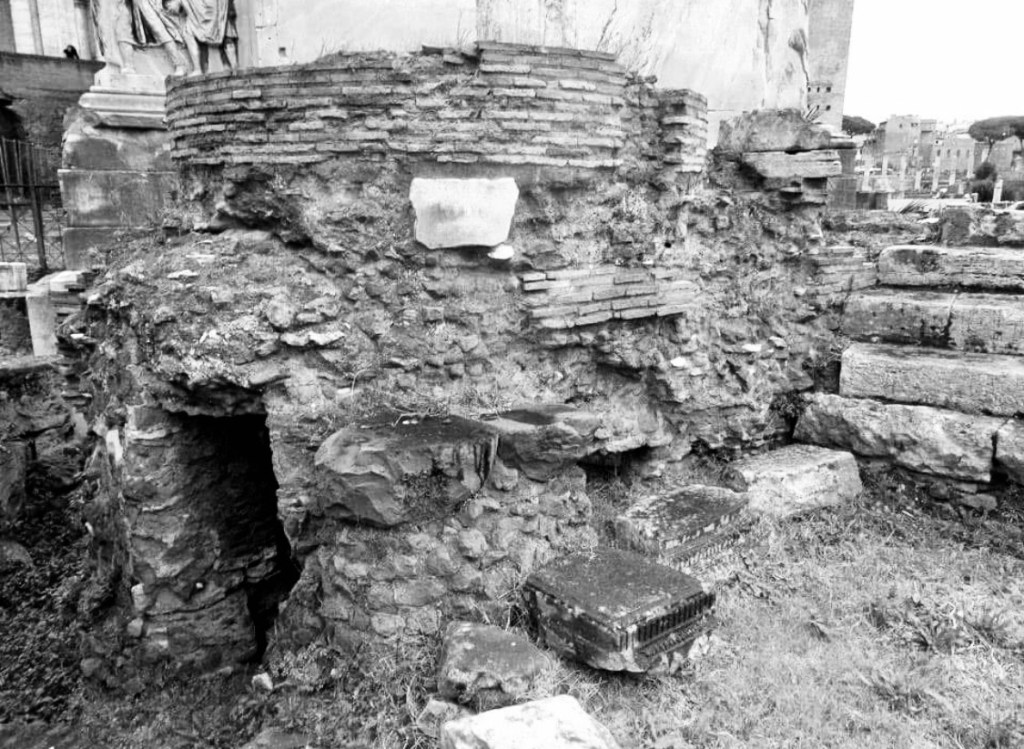
The Mundus was not a fringe superstition or symbolic gesture. According to Roman tradition, it was dug at the founding of the city and modeled on older Italic and Etruscan beliefs about the underworld.
It was sealed most of the year by a heavy stone known as the lapis manalis. On only a few specific days each year, the seal was lifted. Those days were marked as dies nefasti, times when no public business could be conducted. Courts closed. Political activity stopped. Even military matters paused. Romans believed that when the Mundus was open, the spirits of the dead were free to move among the living, and the boundary between worlds was dangerously thin.
Knowing that history while standing there changes everything.
Standing at the opening, my body reacted before my mind could catch up. A coldness came over me, sudden and unmistakable. Goosebumps ran up my arms, uninvited. It wasn’t fear exactly. It was recognition. The sense that I was standing somewhere that had never been neutral.
This was what later generations would come to call Hell.
Not as theology, but as inheritance. Long before Christianity gave darkness a name, this was where darkness was located. Where fear and reverence shared the same ground. Everything that would later be packaged as evil had roots here, shaped by centuries of belief, ritual, and restraint.
What unsettled me was not the idea that something ruled here. It was the realization that this was where our fear of what lies below was first organized. Given structure. Given boundaries. Given meaning. This wasn’t about demons or punishment. It was about acknowledging that darkness exists, that human beings are capable of it, and that pretending otherwise is dangerous.
The cold lingered. The stillness lingered. Not because something was happening, but because something had happened here again and again. Generations of people stood in this same place knowing it mattered enough to stop their lives when it was opened.
Intent leaves residue.
If the Forum is haunted by what Rome did openly, this place is haunted by what Rome acknowledged quietly. The understanding that civilizations do not collapse because evil exists, but because it goes unexamined and uncontained.
Standing there, everything came together. Law. Power. Ritual. Spectacle. Control. The Forum was not just a civic center. It was a containment system built directly over what terrified it most, not to erase it, but to keep it watched.
That realization gave me pause.
Rome does not ask you to fear it.
It asks you to remember.
And maybe that is the truest haunting of all.
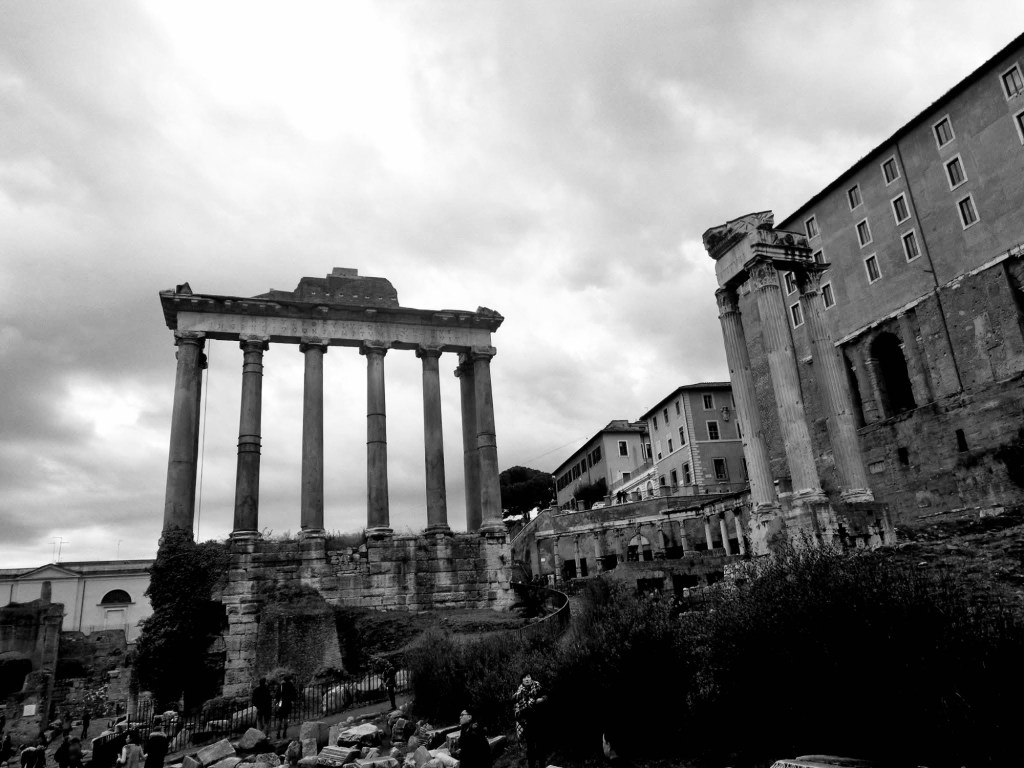
Photographs by Steven LaChance
© 2026
 Steven LaChance Blog
Leave a comment