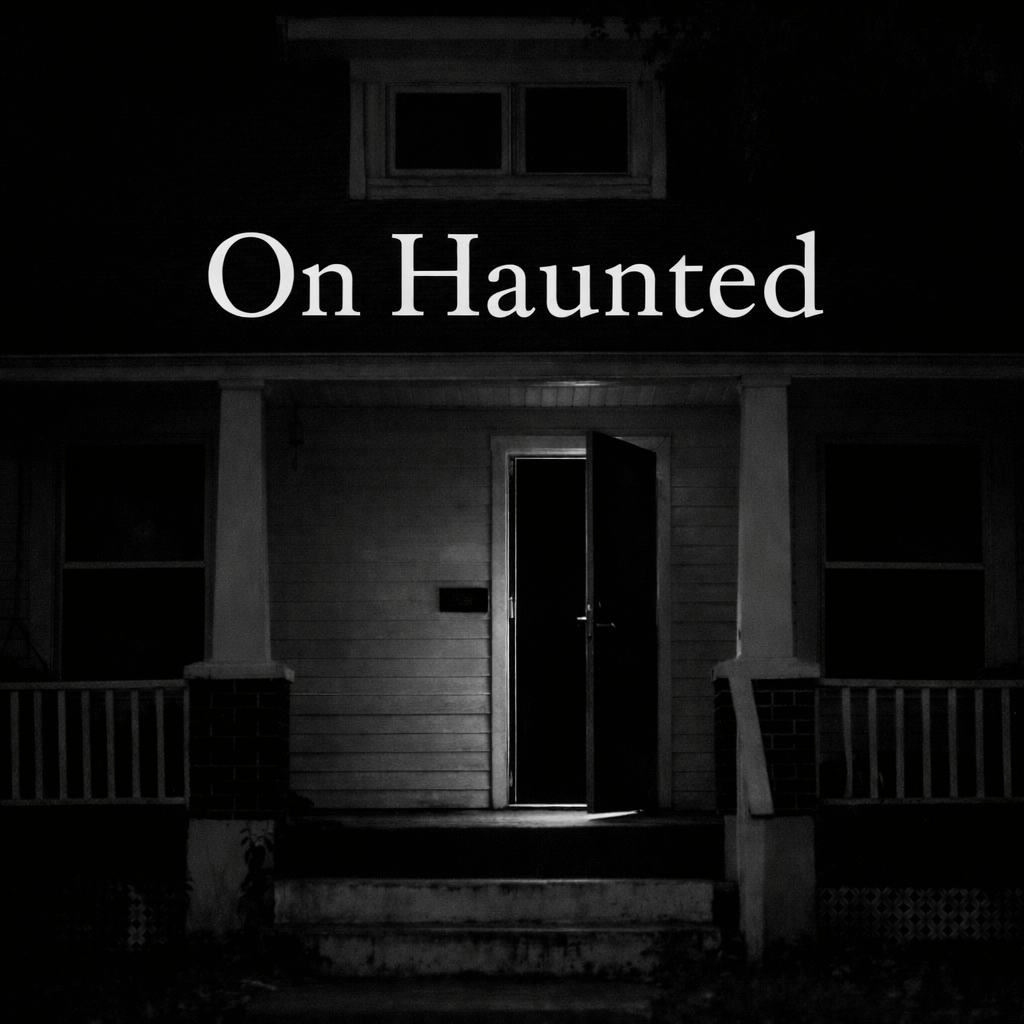
What happens to a haunting after enough time has passed?
More specifically, what happens to the person who lived inside it once the noise finally dies down?
I think about that now and then. Usually when things are quiet. Sometimes it comes up when I think about the Screaming House. Not the way it once did. Not with urgency or analysis. More as a reference point. Enough time has passed that I can notice how it sits in me instead of reacting to it.
I live with that haunting differently now.
For a long time, my life was organized around it, whether I talked about it or not. It shaped how I listened to rooms. How I slept. How I paid attention to small shifts in sound or mood. It was not something that simply happened and ended. It kept moving through me long after the physical experience was over.
Decades later, that has changed. It has a place now. Not erased. Not minimized. Just no longer leaning into every moment of the present.
There are still moments that can trigger the PTSD from it all. Certain smells. Certain sounds. Certain emotional patterns. That does not surprise me anymore. Trauma leaves marks. They do not disappear just because time passes. What has changed is how I meet them. They no longer decide what happens next.
Most of the time, I am at peace with it now. Not the kind of peace you talk yourself into. The kind that comes from letting something finally rest.
That took more out of me than I understood at the time.
One of the harder things was accepting that I may never fully understand why it happened. Most likely, I never will. I had to stop treating that as something unfinished. Because knowing why would not have changed what it was like to live through it. It happened. It was horrific. No explanation would ever soften that.
Looking back, I can see how my search for meaning kept me closer to it than I needed to be. What I thought was investigation was often just a way of staying connected to the wound.
Another shift came when I began to see something I did not want to see for a long time. Some of the people who called themselves my friends were not really attached to me at all. They were attached to the haunting.
You learn that in moments you do not forget. When you are lying in a hospital bed and the people who say they care cannot find the time to come by, but those same people show up quickly when there is public attention involved. Book signings. Interviews. Speaking engagements about the haunting. At some point, you stop explaining that contrast away. You see it clearly. They were there for the story, not for the person who lived through it.
For some, the haunting became a way in. A reason to stay close. A story they wanted access to. Walking away from that was not about anger. It was about taking care of myself. It was about choosing to be seen as a person again instead of a point of interest. Once I did that, a quiet kind of relief followed.
The physical haunting itself ended in 2011, when I died on the operating table. That is when it stopped. Completely. What lingered was the psychological residue. That took longer to settle. I use that word carefully. Settle. Because that part never disappears entirely. It grows quieter. Less intrusive. It finds its place. It becomes something you carry instead of something that carries you.
What has also changed is how I feel about how others interpret the experience. I no longer feel the need to manage it. I do not correct people. I do not steer them toward conclusions. Whatever someone believes does not change what happened. It never has.
I understand now that the depth of the experience is more than most people can really grasp from the outside. That does not trouble me anymore.
When people talk about the haunting, I mostly listen. Not to respond, but to understand where they are coming from. In a way, I find myself weighing their understanding the same way they weigh my experience. Those conversations tend to reveal more about how they think and what they have lived with than anything they might say about me.
Some people understand the cost of it. Many do not. That is just the reality. My responsibility is not to make the story easier to absorb or more comfortable to hold. It is to let it stand as it is and let people meet it from wherever they are.
Time does not erase hauntings. But it does change how we carry them. For me, it no longer defines my life. It no longer precedes me into a room. It no longer decides how close people get or how I see myself. It is a chapter that closed, even if it still echoes now and then.
What I have learned is that peace is not about resolution. It is about boundaries. About knowing when asking more questions stops being useful, and when the better choice is to protect the life you are living now.
What I did not expect is how this peace would change my work.
I stepped back into my research differently. Quieter. More grounded. I still help others who are navigating similar experiences, sometimes directly, sometimes from a distance. That distance matters. It keeps me steady. It lets me be present without being pulled back into someone else’s fear.
I no longer see these experiences as finished events, sealed off in the past and waiting to be analyzed. I see them as part of our living lives. They move with us. They change shape over time. They continue to affect how we think, how we feel, and how we move through the world.
This is not something dead to be examined from afar. It is something alive. Ongoing. And my work begins from that understanding.
I am not researching now to prove anything. I do not need to. I know it exists. I lived it. What matters more to me now is what happens afterward. How people learn to live with it instead of fighting it. How they sleep again. How they trust spaces again. How they allow something strange to exist at the edges of life without letting it take over the center.
And even for those who have never experienced it directly, I think it matters to understand that it is there. Woven into the world in quiet ways. Part of the same reality we all move through, whether we name it or not.
I am careful with labels these days. They can be useful, but they can also close things off too quickly. I am still learning how to live with not knowing. How to leave room for uncertainty without letting it turn into fear.
There is a difference between studying something as if it were finished and learning how to live alongside it. One tries to master it. The other accepts that it is part of the landscape. I find myself firmly in the second place now.
This is where I am.
Not untouched.
Not unmarked.
But grounded. Still learning. Living with what I know and what I do not, without the haunting standing in front of me anymore.
And that feels like enough.
 Steven LaChance Blog
Leave a comment