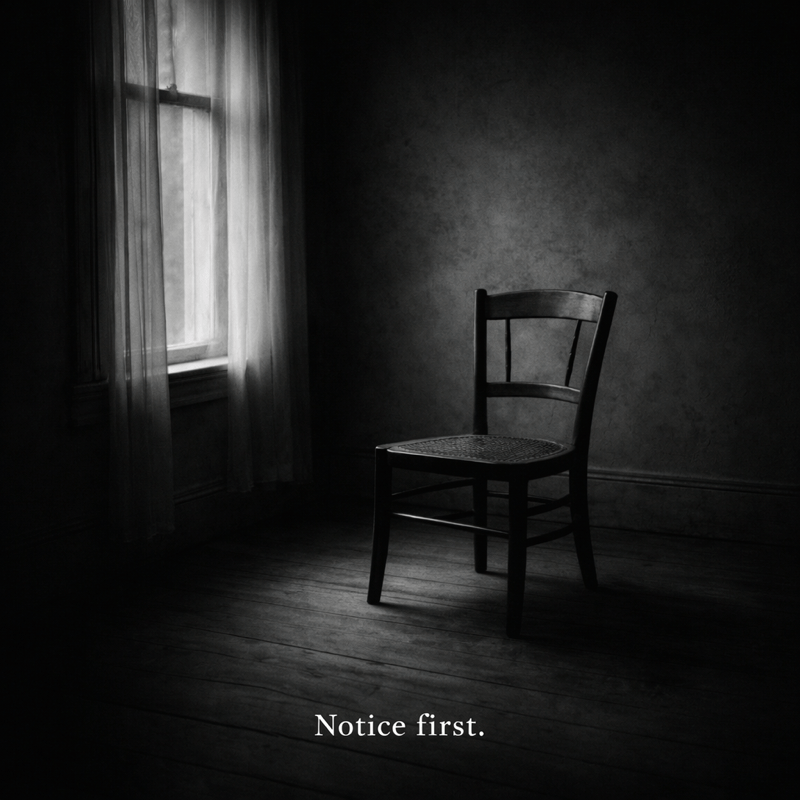
So where did my understanding of the paranormal really come from?
My own haunting played a big part in my search for answers. It didn’t come from equipment or theory. It came from experience. From being in places where nothing dramatic happened, and yet something lingered anyway. Places that looked ordinary, sounded ordinary, but made my body react before my mind had time to catch up. A quiet unease. A sense that something had passed through and left something behind.
I get a feeling in a very specific place. That space at the base of my neck and upper back. It’s subtle, but it’s consistent. Not pain. Not fear. More like a tightening. A quiet signal that something in the environment has shifted before I’ve consciously registered why.
There’s a practical reason that area shows up for me. It’s where the lower cervical spine meets the upper thoracic spine, a convergence point for posture muscles and a dense network of nerves tied to balance, alertness, and stress response. It’s one of the places the body reacts first when something changes around you, often before the mind has sorted out what it’s responding to.
That sensation has shown up for me more times than I can count, and it almost always comes first. Before a thought. Before an explanation. Before I reach for equipment or start trying to measure anything. It’s my body reacting the way bodies do.
After those experiences, I went looking for explanations. I watched the films. I tried the television shows. Most of them didn’t resonate with me, not because the subject itself was wrong, but because entertainment tends to rely on clean narratives and clear answers. Real experiences rarely offer that. Most of the time, the honest ending is simply that we don’t know.
That’s why I think one of the most important tools in paranormal work is something we already carry with us. Our senses.
Most of the time, if you’re paying attention, you’re a better EMF meter than the equipment in your hand. Your body notices changes before a device ever does. Atmosphere. Unease. That subtle shift you can’t quite explain but can’t ignore.
Sometimes it helps to put the equipment down. To stop trying to measure a place and instead experience it. Stand still. Listen. Let the location speak before you start interpreting it. You may be surprised how much clearer things become when you approach a case with openness instead of immediately shifting into technical mode.
That doesn’t mean research and tools don’t matter. They do. But when they become the focus, we risk missing something essential. These experiences aren’t separate from nature or the world we live in. They’re part of it. And so are we. Our bodies evolved to read environments long before we built devices to quantify them.
Sometimes the most meaningful information isn’t a number on a screen.
It’s what a place does to you when you give it your full attention.
Open yourself to the experience first.
The readings can wait.
 Steven LaChance Blog
Leave a comment