A Haunting; Fear House
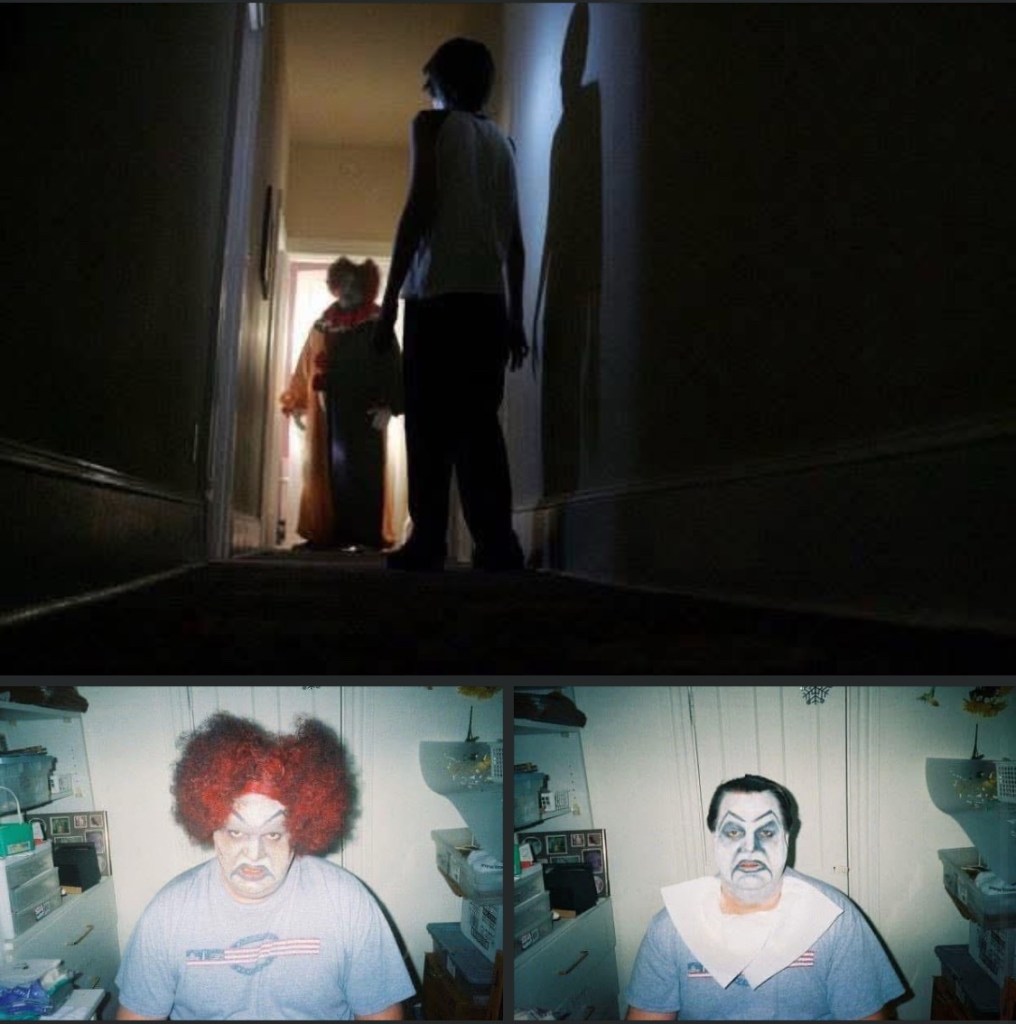
This photo shows Keith Gregory in makeup for A Haunting: Fear House. It’s from the one scene that people always seem to remember.
The truth is, I had a very hard time with how that scene was presented. On screen it came across almost like a moment from IT, a full-on horror clown. But that isn’t what really happened. When a child experiences trauma, they often reach for familiar images or fears to explain the unexplainable. If clowns are something that frighten them, they may describe what they saw as “clown-like,” even if it wasn’t literally a clown.
Psychologists call this process trauma-linked association: the brain uses metaphors, fears, and symbolic images to make sense of overwhelming experiences. I’ve asked for opinions over the years from experts including psychologists, priests, and even demonologists. The consensus is that my son likely related what he experienced to the image that frightened him most. Was it actually a clown? Highly doubtful. But what it really was, we may never fully know, at least in this lifetime.
What I do know is that something horrific happened to us. And it left a mark deep enough that even the show’s dramatization could not erase the truth beneath it. That scene became more than a reenactment. It became a symbol, a reminder of the haunting that invaded our lives.
What unsettled me most was not the makeup, not the camera work, not even the comparisons to IT. What unsettled me was the way trauma bends memory into shapes we can barely understand. The child’s voice describing something so wrong, and the adult’s silence knowing there will never be a full answer.
That absence of knowing lingers. It lives in the gaps between what we remember and what we can never name. It haunts the quiet. It waits in the shadows of the story, reminding us that some things cannot be explained away.
This scene, as painful as it was for me to see interpreted on television, became a great motivator for me to write The Uninvited. I understood then that if our story was going to be told truthfully, it could not be filtered through special effects or horror tropes. It had to be told as it really was: raw, unresolved, and terrifying in its mystery.
The strange thing is that this clown, born from a child’s description of fear, refused to stay confined to our story. It took on a life of its own, spreading beyond our walls and into the imaginations of those who saw it. Over time it became more than just a scene from a television episode. It began appearing on lists of the most frightening clowns in entertainment, ranked among figures like Pennywise, Twisty, and Art the Clown. For viewers it was a disturbing image that lingered in their nightmares. For us it was something much darker, because we knew it came from a place of real terror, a child’s attempt to put words and shape to what should have been unspeakable. What the world saw as entertainment was, for us, a reflection of something that had once stood in the room, breathing in the shadows, bending fear into a mask we would never forget.
The clown was never the monster. The fear was.
And it was that fear that whatever haunted us fed upon, twisting it into shapes the mind could barely hold. It wore that fear like a mask, stepping closer each time the house fell quiet, each time a child’s breath caught in the dark. Fear was its weapon, but it was also its game. It played with it, fed on it, and slipped deeper into our lives through it. What the world saw as a painted face on a television screen was, for us, the reminder of something far more insidious: a presence that knew how to make terror itself its disguise.

 Steven LaChance Blog
Leave a comment