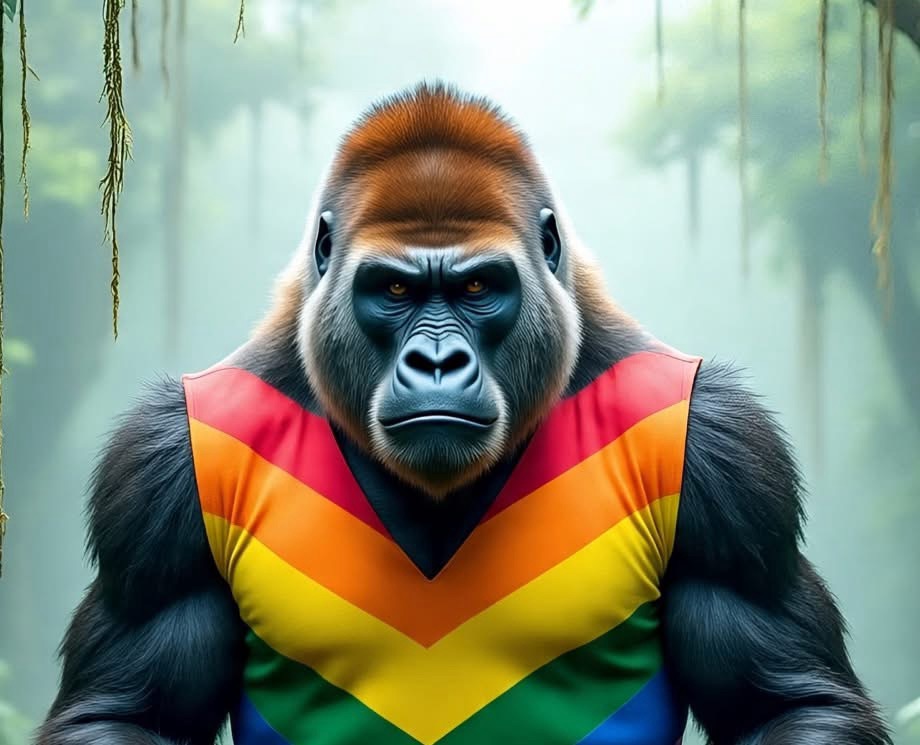
Since Gorilla hit the shelves, I’ve been asked the same question more than once—Is this an LGBTQ+ book?
The answer is both yes and no. Gorilla is a horror novel about mind control, manipulation, fanaticism, and the darkness behind systems of power. It’s brutal. It’s real. And yes, it focuses on queer characters because it had to and yes, I wanted it to. The horror in this book doesn’t just come from ghosts or shadows. It comes from a man of faith who turns belief into a weapon. It comes from a government-backed experiment that uses human beings—often the most vulnerable—as test subjects. The queer community becomes a target in Gorilla because, in the real world, that’s what often happens. We’ve seen it. We live it.
I’m a gay man. I write from my own experience. I write what I know and what I’ve survived. If that makes Gorilla a gay book, then I’m proud of that. But I also think calling it just a gay book misses the point. This is a story about what happens when humanity is stripped away. When fear is exploited. When evil is built, funded, preached, and unleashed in plain sight. Some might even call it a WOKE DEI book, and that would be a fair assessment. I wrote it this way on purpose. This is a relevant kind of horror with a bite. It needs to pulse from reality and wokeness.
Gorilla is currently in the top 100 of LGBTQ+ Horror, and that means something. It means the story is connecting. It means people are paying attention. And it means we’re having the right conversations.
I’ve always written with a diverse voice. You can see that in Crazy. You can feel it in Glow. And Gorilla takes that even further. Guess what? The Uninvited and Blessed are the Wicked are both gay books because they tell my story, the personal struggles of a gay man.
This story in Gorilla is not comfortable. It’s not safe. But it’s necessary. Because sometimes horror is the only way to tell the truth loud enough for people to hear it.
 Steven LaChance Blog
Leave a comment