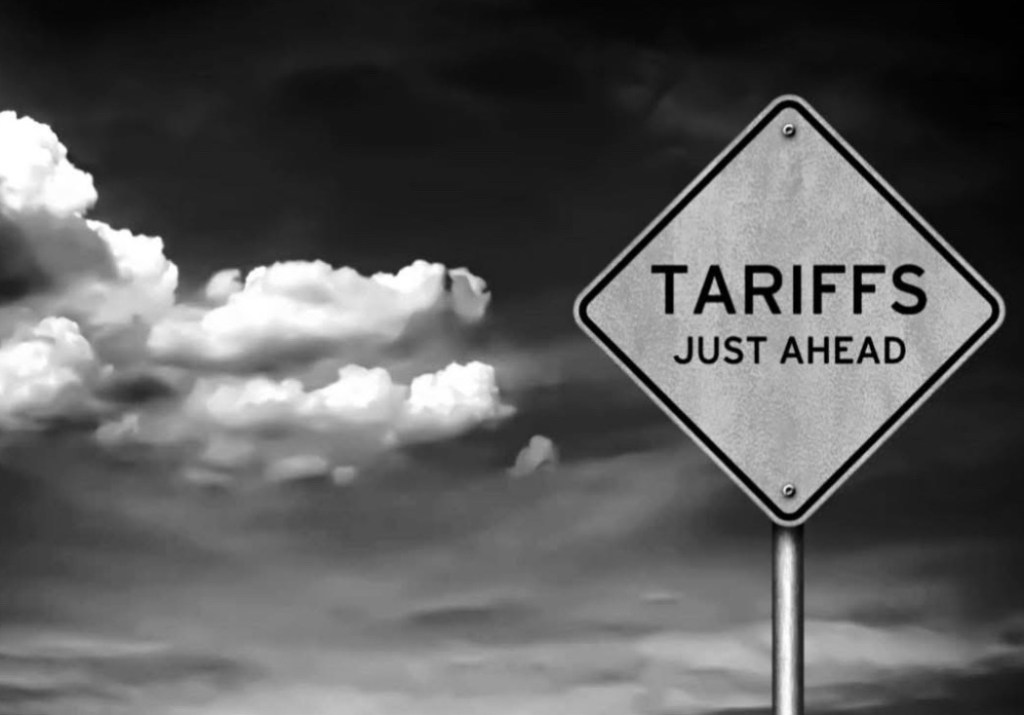
I don’t for a second think someone out there supporting the Trump administration will look at this and understand. Their reasoning skills are clouded and misguided. Most of them have no clue about the hardships that are ahead. This is for the reasonable folks out there asking, “What does this mean for me?” The outlook is not good.
Let’s be clear: tariffs aren’t just complex economic strategies—they’re blunt tools that will hurt everyday people. The 25% tariffs on goods from Mexico and Canada, along with rising duties on Chinese imports, aren’t just policy discussions; they’re real financial hits to households, workers, and businesses. The administration may pitch these measures as “protection,” but the truth is undeniable: this will backfire, and working-class Americans will feel the sting. Here’s what to expect.
Forget about gentle inflation. This isn’t a theoretical scenario—it’s a financial hit. That avocado toast or salad you love? Expect a 25% price jump overnight. Gas prices, already unstable, are going to climb even higher due to tariffs on Canadian energy. And don’t kid yourself: every part of the supply chain—electronics, appliances, clothing—will pass these costs on to you. Low- and middle-income families, already stretched thin, will face tough choices on essentials. This isn’t just an “adjustment.” It’s economic hardship. Industries like auto manufacturing and construction aren’t just getting “disrupted”—they’re being sidelined.
Tariffs on steel, aluminum, and lumber aren’t mere bumps in the road; they’re systemic breakdowns. Factories that depend on cross-border materials will come to a halt. Construction projects will stall, driving housing costs even higher. Who pays the price? Workers finding themselves laid off from idle plants and families getting priced out of homes. This isn’t collateral damage—it’s a direct hit.
Mexico and Canada aren’t just “thinking about” retaliation—they’re already drafting their responses. U.S. farmers, manufacturers, and small businesses will be in the crosshairs. Soybeans rotting in Midwestern fields. Dairy farmers pouring out milk. Factory workers in the Rust Belt facing layoffs because their products are priced out of international markets. These aren’t hypotheticals. They’re unavoidable realities. The tariffs marketed as “saving jobs” will end up destroying them—and rural communities and blue-collar workers will feel the strain first.
Stock market fluctuations are just the tip of the iceberg. These tariffs will drive up inflation, hitting families already struggling with debt. Slower GDP growth? Try a stranglehold on recovery. Economists aren’t just “warning” anymore—they’re raising alarms that these policies could slip the economy into recession. And for what? A political soundbite that overlooks human suffering.
This isn’t about “trade strategy.” It’s about real people—cashiers, truck drivers, teachers—who will see their paychecks shrink at the checkout line, their jobs vanish due to retaliation, and their futures mortgaged to short-sighted brinkmanship. The administration’s rhetoric won’t protect anyone from higher bills, shuttered factories, or economic despair.
So let’s cut to the chase: these tariffs will let down the very people they claim to protect. The question isn’t whether pain is on the way—it’s how many lives will be disrupted before we face the facts. Trade wars aren’t “winnable.” They’re tragedies, and we all bear the cost.
 Steven LaChance Blog
Leave a comment