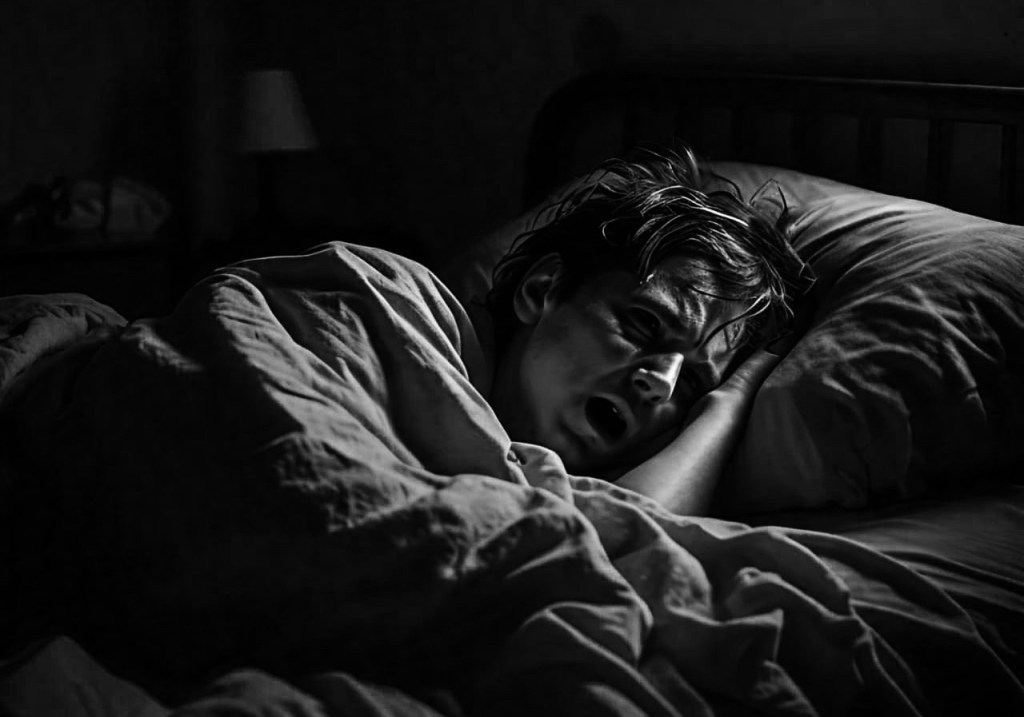
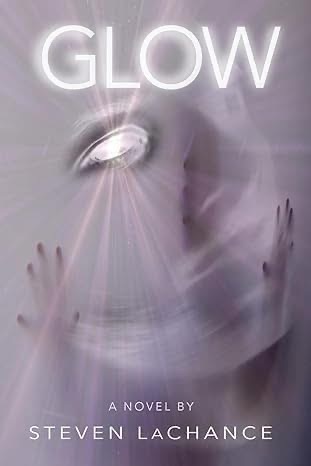
Have you ever woken up in the middle of the night, unable to move, only to see a dark, shadowy figure lurking in the corner of your room? If so, you’re not alone. Over the years, I’ve delved deep into the enigmatic world of shadow people, and my latest book, Glow, explores the eerie intersection of sleep paralysis and these mysterious entities. But the more I research, the more I realize how much we still don’t know.
Let’s start with the science. Sleep paralysis is a well-documented phenomenon. It occurs during the transition between wakefulness and sleep, when the brain and body temporarily disconnect. Your mind wakes up, but your body remains in a state of paralysis—a protective mechanism to prevent you from acting out your dreams. During this state, the brain often conjures vivid hallucinations, ranging from benign to terrifying.
But here’s the twist: why do so many people across different cultures report seeing shadowy, humanoid figures during these episodes? Science explains the how—the misfiring neurons, the REM intrusion, the hyperactive amygdala—but it doesn’t fully explain the why. Why do these hallucinations so often take the form of shadow people?
This is where the paranormal steps in. Cultures around the world have their own interpretations of these shadowy beings. In Indonesia, for example, there’s the gendruwo, a malevolent spirit said to prey on those who are vulnerable during sleep. In the West, shadow people are often associated with malevolent entities or even extraterrestrial visitations. And then there’s SUNDS (Sudden Unexplained Nocturnal Death Syndrome), a condition linked to sleep paralysis in Southeast Asian cultures, where victims often report being visited by a terrifying presence before their death.
But are these shadow people merely cultural constructs, or is there something more to them? The answer, it seems, depends on whom you ask.
For skeptics, shadow people are nothing more than neural glitches—a byproduct of the brain’s attempt to make sense of its surroundings during a state of confusion. Research supports this view, showing that the brain’s threat-detection systems go into overdrive during sleep paralysis, often conjuring figures that feel real but are entirely fabricated.
On the other hand, paranormal enthusiasts argue that shadow people could be interdimensional beings or spirits that become visible during altered states of consciousness. They point to the consistency of these encounters—how people from vastly different backgrounds describe similar entities—as evidence that there’s more to the phenomenon than mere hallucination.
So, where does that leave us? Sleep paralysis exists at a fascinating crossroads: biology provides the framework, culture shapes the experience, and the line between hallucination and reality becomes increasingly blurred. Even researchers and scientists admit that there’s still much we don’t understand about sleep and the brain.
Personally, I find the mystery of shadow people both thrilling and humbling. It’s a reminder that, despite all our advancements in science and technology, there are still aspects of the human experience that defy explanation. Whether you believe shadow people are neural glitches or something more, one thing is certain: they force us to confront the unknown, both within ourselves and in the world around us.
What do you think? Are shadow people a product of our brains, or could they be something beyond our current understanding? I’d love to hear your thoughts—and if you’ve ever had an encounter with a shadow person, feel free to share your story. After all, the more we talk about these experiences, the closer we might get to unraveling the mystery.
 Steven LaChance Blog
Leave a comment