I’ve spent much of my life thinking about silence—not the quiet of a library, but the kind that erases people. Growing up gay in the 1960s meant navigating a world determined to mold me into something I wasn’t. My interests in films like Valley of the Dolls or West Side Story were dismissed as unserious, while my admiration for performers like Tom Jones raised eyebrows. I was steered toward “masculine” hobbies like sports, not because I enjoyed them, but because they fit a script I didn’t write. This was silencing.
History class offered no refuge. There were no lessons about LGBTQ+ figures, let alone discussions of same-sex relationships in antiquity. When I stumbled upon a reference to Alexander the Great’s sexuality as a teenager, it felt revolutionary. Here was a leader revered for his strength and ambition—someone like me, yet entirely absent from textbooks. The omission was deliberate. Silencing, I realized, wasn’t just about shaming individuals; it was about erasing entire legacies.
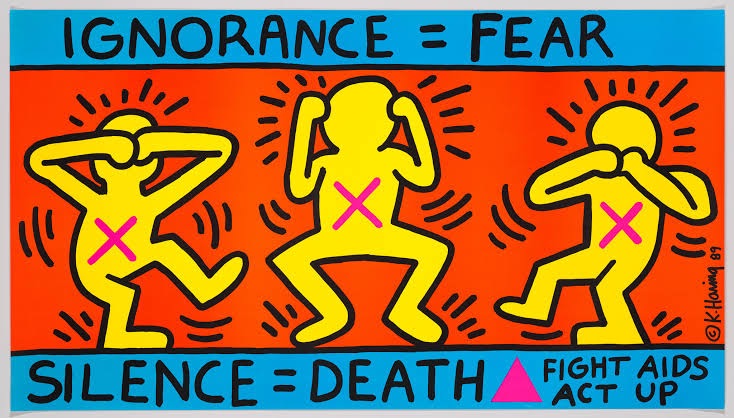
The 1970s and ’80s amplified the noise of condemnation. Anita Bryant’s televised sermons framed LGBTQ+ people as moral failures, while Jerry Falwell and the Moral Majority conflated AIDS with divine punishment. Hearing authority figures declare you “unclean” takes a toll. Many of us internalized that shame, and therapy became a lifeline. But then I encountered Keith Haring’s Silence = Death artwork. Its stark message crystallized what I’d felt for decades: Complicity in your own invisibility is a slow death.
My personal life mirrored this struggle. I was married to a woman for seven years. Some assume our divorce was about my sexuality, but the truth it wasn’t, it was about her more than it was me. Gay was not the issue. It was simpler: She was unwell and the relationship was unsustainable. Staying silent about who I was had nearly destroyed me long before that marriage. I’ve met too many queer people my age with similar stories—people who buried their truths to survive, only to pay a steep price in isolation or self-destruction.
Today, the methods of silencing have evolved but persist. In 2025 alone, over a dozen U.S. states introduced bills restricting transgender healthcare and education about LGBTQ+ identities. Globally, countries like Bulgaria and Georgia enacted laws censoring “LGBT propaganda,” echoing Russia’s 2013 legislation. Same-sex relationships remain criminalized in 60+ nations, with 41 specifically targeting queer women. These policies don’t just restrict rights; they send a message that our lives are debatable.
Yet there’s defiance in the data. This year, Thailand and Liechtenstein legalized same-sex marriage, joining 37 other nations. Social media platforms have become unexpected archives of queer history, with Gen-Z creators sharing everything from Stonewall documentaries to Alexander the Great deep dives. Studies show LGBTQ+ youth with access to community history report 30% lower rates of depression. Visibility matters.
To those who still feel pressured into silence: You aren’t alone. Your existence is not a debate. I speak openly now not because it’s easy, but because I’ve seen what happens when we don’t. Keith Haring was right—silence isn’t neutrality; it’s surrender. And after six decades of fighting to be heard, I refuse to surrender.
 Steven LaChance Blog
Leave a comment