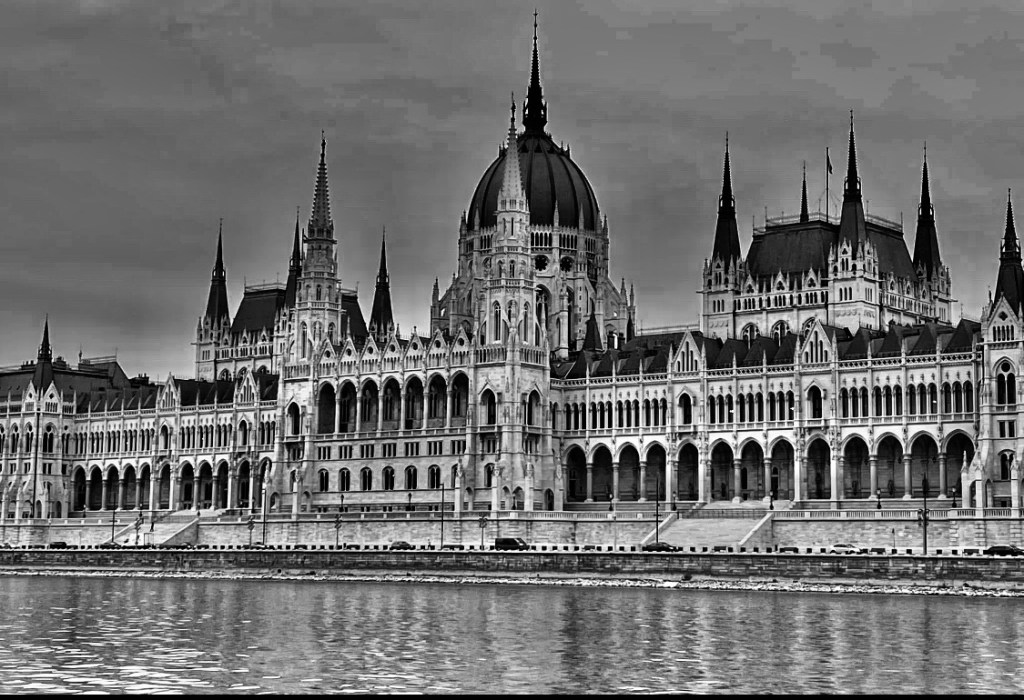
A few years ago, my husband Rick and I traveled to Budapest, Hungary. It’s a city that’s often romanticized for its stunning architecture, thermal baths, and rich history. And don’t get me wrong—it is beautiful. The Danube River glimmers at night, the Parliament building is a masterpiece, and the ruin bars are as eclectic and vibrant as you’ve heard. But for us, the experience was far more complicated. I’ve hesitated to write about our time there, partly because it’s hard to articulate the unease we felt, and partly because the story of Budapest isn’t just about its beauty—it’s about the suffocating political climate that has taken hold under Prime Minister Viktor Orbán.
There’s a heaviness in the air there, something that’s hard to put into words. The people, though kind in individual interactions, often carry an air of severity and sadness. It’s as if the weight of the country’s political reality has seeped into everyday life. This became even more apparent when we spoke with some friends we met who are part of the LGBTQ+ community. They shared stories of living in constant fear—fear of discrimination, fear of losing their rights, and fear of a government that has made it clear they are not welcome. Under Orbán’s leadership, Hungary has become a place where marginalized communities are increasingly targeted, and where dissent is systematically silenced.
To understand why Hungary feels the way it does today, you have to look at its political landscape. Viktor Orbán, Hungary’s prime minister since 2010, has methodically dismantled the country’s democratic institutions. His party, Fidesz, has rewritten election laws, gerrymandered districts, and restricted press freedoms to ensure its dominance. Despite receiving less than 50% of the popular vote in both the 2014 and 2018 elections, Fidesz secured a two-thirds majority in parliament both times. This isn’t just politics as usual—it’s a calculated erosion of democracy. Orbán’s government has also cracked down on civil society, targeting NGOs, universities, and independent media. Critics of the regime are labeled as enemies of the state, and dissent is increasingly risky. It’s no wonder that Hungary has fallen in global rankings for press freedom and democratic governance.
Orbán’s influence extends far beyond Hungary’s borders. He’s become a hero to far-right movements worldwide, including in the United States. At the 2023 Conservative Political Action Conference (CPAC) in Budapest, Orbán delivered a fiery speech in which he likened liberalism to a “virus” and declared war on “woke culture.” The conference, with segments titled “Make Kids Not War” and “No Country for Woke Men,” was a rallying cry for right-wing populists. His rhetoric is eerily familiar. He rails against LGBTQ+ rights, immigration, and progressive education, framing them as existential threats to traditional values. Sound familiar? It should. His playbook is strikingly similar to the one used by Donald Trump and other far-right leaders. In fact, Trump has openly admired Orbán, calling him a “strong leader” and even hosting him at Mar-a-Lago.
Hungary isn’t just a cautionary tale—it’s a blueprint. Orbán has shown how to consolidate power, suppress opposition, and reshape a society in the image of authoritarianism. And his success has inspired others. From the U.S. to Brazil to Italy, far-right leaders are borrowing from his tactics, using culture wars and fear-mongering to gain and maintain power. If Hungary is any indication, the fight to protect democracy and human rights is far from over. It’s a fight that requires vigilance, solidarity, and a commitment to standing up for marginalized communities.
Budapest will always hold a complicated place in my memory. It’s a city of contrasts—stunning yet somber, historic yet haunted by its present. While I’m grateful for the experience, I can’t say it’s a place I’d return to anytime soon.
As we navigate our own political challenges, let’s remember that democracy is fragile. It requires active participation, critical thinking, and a willingness to stand up for what’s right. Because if we don’t, we risk losing it altogether. So, here’s to learning from the past, fighting for the future, and never taking our freedoms for granted. The road ahead may be long, but it’s one worth traveling.
 Steven LaChance Blog
Leave a comment